 Layer
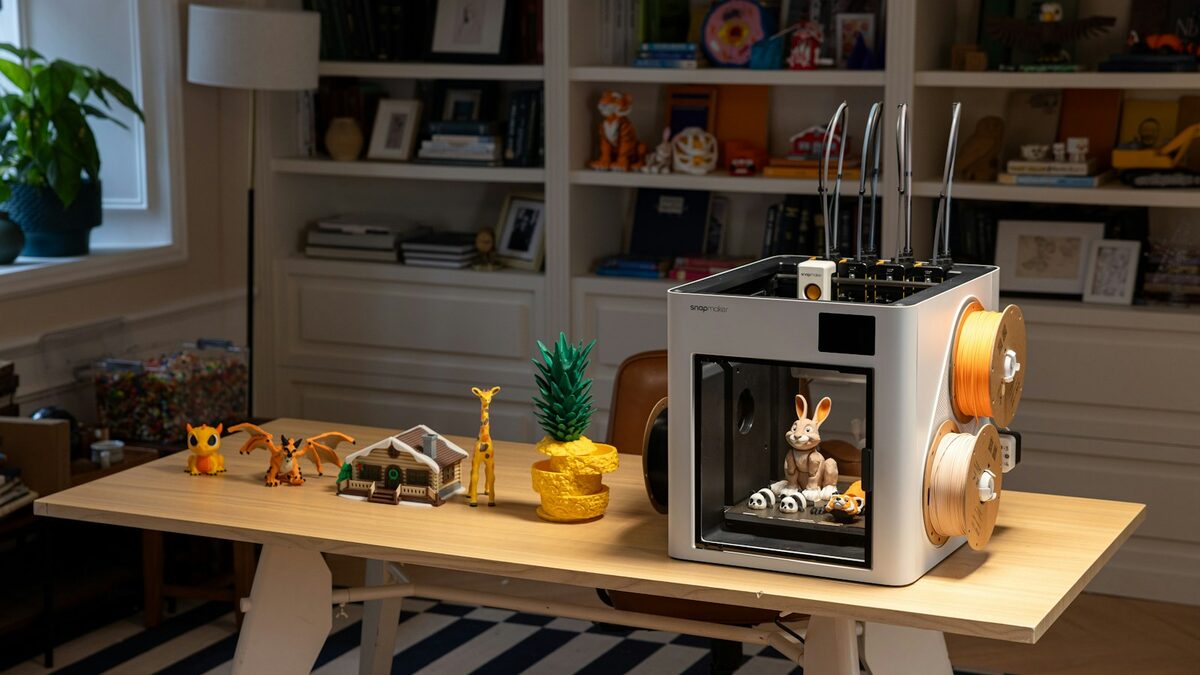
I get asked "which filament should I buy" more than any other question, and for years my honest answer was "whatever's on sale, PLA is PLA." I don't believe that anymore. After locking one 0.2mm profile on my Prusa MK4S — no per-brand tuning, no retuning retraction, nothing — and running the same 20-minute test part across eight PLA brands, the differences were bigger than I expected, and they weren't evenly distributed by price.
The test part has a bridging section, a set of overhangs at 30/45/60 degrees, thin walls down to 0.6mm, and a flat top surface that shows layer consistency. Same nozzle, same day, same spool of PTFE tube, same everything except the plastic.
The brands and what I paid
Prices below are what I actually paid in October 2026, including shipping, rounded to the nearest dollar, for a 1kg spool.
| Brand | Price/kg | Where I bought it |
|---|---|---|
| Prusament PLA | $29.99 | Prusa's own store |
| Polymaker PolyTerra | $21.99 | Polymaker store |
| Overture PLA Professional | $19.99 | Amazon |
| eSun PLA+ | $16.99 | Amazon |
| Hatchbox PLA | $18.49 | Amazon |
| Bambu Lab PLA Basic | $17.99 | Bambu store |
| Sunlu PLA+ 2.0 | $15.49 | Amazon |
| Generic "no-name" PLA | $12.99 | Amazon, unbranded spool |
What actually separated them
Three things explained almost all the quality gap: color consistency spool-to-spool, how forgiving the filament was on bridging without tuning, and dimensional accuracy on the thin walls.
- Bridging: Prusament and Polymaker PolyTerra bridged the 40mm gap cleanly with barely any sag. Bambu PLA Basic and Overture were close behind. The no-name spool sagged visibly and the eSun and Sunlu samples sagged a little less but still noticeably.
- Dimensional accuracy: measuring the 0.6mm thin wall with calipers, Prusament came in at 0.61mm, Polymaker at 0.60mm, and the no-name spool at 0.71mm — a 20% oversize that would throw off any snap-fit part.
- Diameter consistency: this is the one that doesn't show up in a single test part but matters most over a whole spool. I ran a digital caliper over 20 random points on each spool. Prusament varied by ±0.02mm, Bambu Basic by ±0.03mm, and the no-name spool by ±0.08mm — enough to cause visible extrusion width changes partway through longer prints.
Surface finish and color
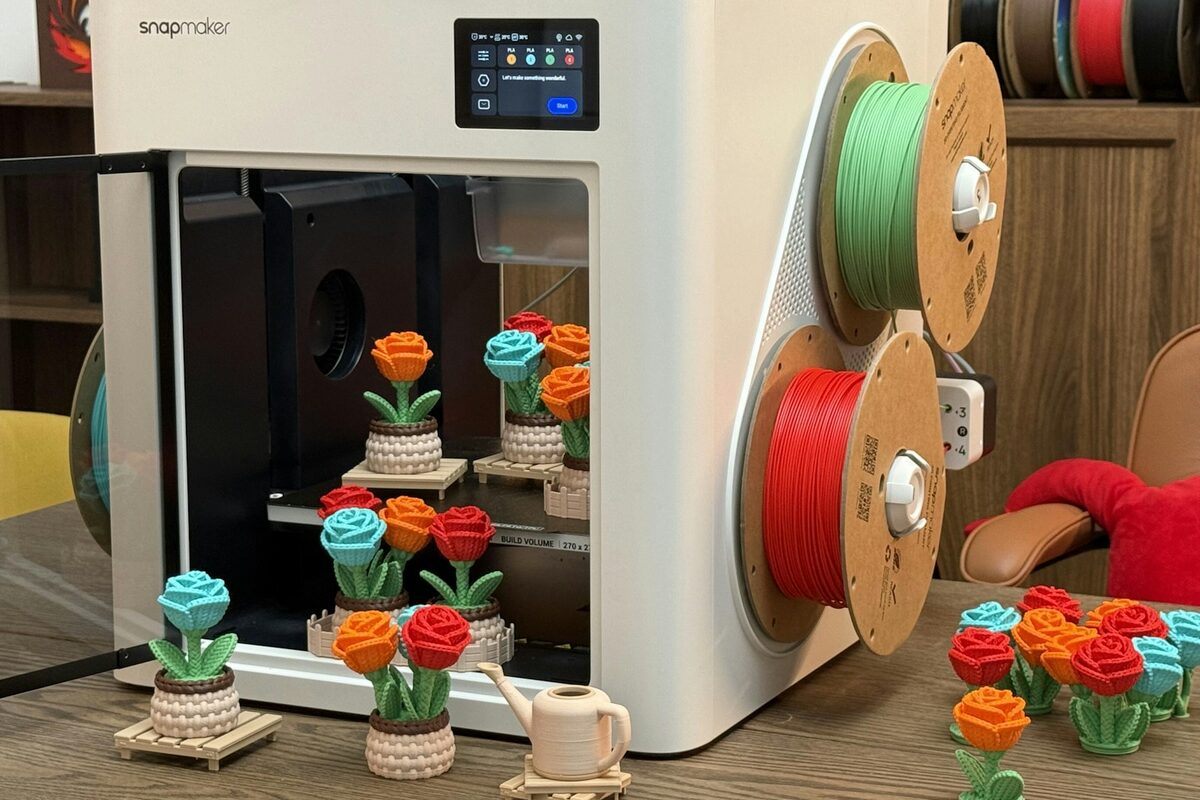
This is the most subjective category but also the one most people actually care about for display pieces. PolyTerra has a distinctive matte finish that hides layer lines better than any glossy PLA on this list — it's become my default for anything that's going on a shelf rather than doing a job. Bambu's PLA Basic and Prusament both have a satin look that photographs well. The budget filaments (Sunlu, eSun, no-name) all have a slightly glossier, slightly more "plasticky" look under direct light.
Color accuracy matched what I expected from the spool label in six of eight cases. The no-name spool's "True Red" printed closer to an orange-red, and the Sunlu "Ocean Blue" ran a shade lighter than its product photos.
Failure rate over five spools
Single-spool tests only tell you so much, so I've also been tracking failure rate — clogs, snapped filament, tangles — across every spool of each brand I've bought over the past year, not just the ones in this test.
- Prusament: 0 failures across 6 spools
- Bambu PLA Basic: 1 tangle across 9 spools (AMS-related, not the filament's fault)
- Polymaker PolyTerra: 0 failures across 4 spools
- Overture: 1 snapped filament across 5 spools, likely from dry storage conditions over summer
- Hatchbox: 0 failures across 3 spools
- eSun PLA+: 1 clog across 4 spools
- Sunlu PLA+ 2.0: 2 tangles across 4 spools, both near the spool's cardboard core
- No-name: 2 snapped filament, 1 clog, across 3 spools
Where the money actually goes
Paying more than about $20/kg for PLA buys you tighter diameter tolerance and more consistent pigment batches, not faster printing or a different chemistry — PLA is PLA, as the old answer goes, but the manufacturing consistency behind the pellets is not. Below about $15/kg, you're buying a real chance of a bad spool, and a bad spool costs you more in wasted time and failed prints than the few dollars you saved.
Which ones are worth the money
If I'm buying for a part that has to be dimensionally accurate — a bracket, a gear, anything that mates with something else — I reach for Prusament or Polymaker PolyTerra without hesitation. For bulk printing where color isn't critical and I just need reliable feeding, Bambu PLA Basic and Hatchbox have earned a permanent spot on my shelf at a noticeably lower price than Prusament. Overture and eSun are acceptable middle options if those four aren't available locally. I'd skip the unbranded spools entirely; the money saved doesn't cover the printing time lost to a bad batch.
Buying tips
A few things I've learned buying filament over several years of this hobby:
- Buy from a seller that states the actual net weight — some "1kg" spools from marketplace resellers are 950g including the spool.
- Vacuum-sealed bags with a desiccant packet inside are a good sign the manufacturer cares about moisture control before it ever reaches you.
- If a brand publishes its own slicer profile presets (Prusament and Bambu both do), that's a reasonable proxy for how much quality control goes into their pellets.
- Buy a small 250g sample roll before committing to five 1kg spools of a color or brand you haven't used.
None of this is sponsored — I bought every spool in this test myself, at full retail price, specifically so the results wouldn't be colored by a free sample.